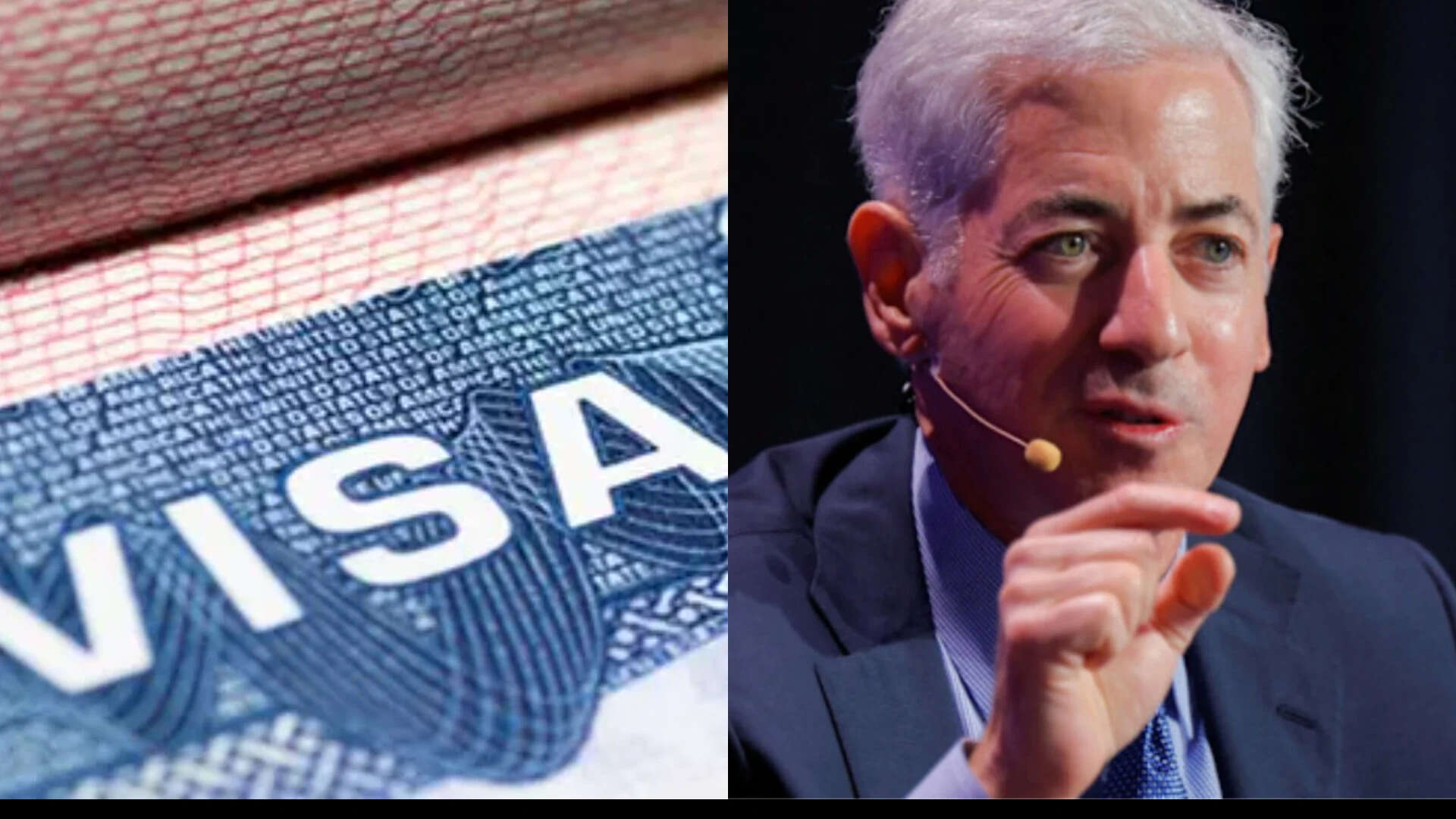
A single tweet can destroy your week. For an Indian woman trying to book a visa slot, it wiped her entire social media presence off the map. It all started when an Indian woman seeks help in getting F-1 visa appointment on X, formerly Twitter, hoping for a bit of advice or perhaps a lucky break. She got a response instead from billionaire hedge fund manager Bill Ackman. Within hours, the situation spiraled into a massive online firestorm, forcing her to delete her account entirely.
This isn't just another story about internet drama. It highlights a massive, simmering anger about immigration, elitism, and a broken bureaucracy that forces regular people to fight for survival while the wealthy try to pull strings.
The student, who identified herself as Threcy Jo Lawrence from Kerala, stated she was an incoming LL.M. candidate at Harvard Law School for the fall term. She had secured a massive scholarship covering more than 90% of her costs. The catch was that her program started on August 13, she had only 25 days left, and the program couldn't be deferred. She was completely stuck without an F-1 visa appointment. She wrote that she didn't come from a family with connections or government contacts. She was a first-generation student watching her dream slip away because of a software slot.
Then Bill Ackman noticed. He reposted her message with an appeal to immigration authorities, asking if someone could help her out. He argued that American immigration policies must change to let the best and brightest study and stay in the United States.
The internet did not applaud his charity. They absolutely went feral.
The Backlash Against Billionaire Intervention
When a billionaire asks the government to fast-track a visa for a specific individual, it doesn't look like kindness. It looks like line-cutting.
Social media users immediately pointed out the glaring unfairness of the request. Thousands of international students spend months refreshing clunky embassy portals, paying exorbitant fees, and waiting in line. They follow the rules. By asking for a personal favor for a Harvard admit, Ackman signaled that the rules are only for regular people.
"Can someone help her out? WTH? I just can't with these elites anymore."
That sentiment echoed across hundreds of replies. People are exhausted by the idea that a high-profile university acceptance token suddenly makes someone more human or more deserving of legal entry than an ordinary applicant.
Another wave of criticism focused heavily on domestic struggles. Many users pointed out that the American job market is brutal right now. College graduates are facing massive underemployment and long stretches of joblessness. When Ackman suggested that America needs to bring in foreign lawyers to create value, it struck a nerve with unemployed American professionals who feel completely abandoned by corporate elites. One user noted that they had been unemployed for a year despite building innovative products, asking why elites assume value creation only happens inside the walls of an Ivy League school.
Then came the skepticism about the internet itself. Some users openly questioned whether the account was even authentic. In an era dominated by engagement farming, AI-generated sob stories, and sophisticated social engineering, people wondered if a prominent billionaire had simply been tricked by a clever bot or a fake profile. Public records indicate a person by that name studied at National Law University Delhi, but on the internet, nobody knows if a brand-new account is completely genuine. Ackman blindly trusted the post, and that perceived gullibility made him an easy target.
The Broken Reality of the Indian F-1 Visa Queue
To understand why this touched such a raw nerve, you have to look at how the U.S. visa system actually functions in India. It is a nightmare.
Every year, hundreds of thousands of Indian students apply to American universities. Once they get their I-20 forms, they enter a chaotic lottery for visa interview slots. The official online booking system is notorious for crashing, locking users out for hours, and showing absolutely zero available dates for months on end.
This scarcity has created a toxic parallel economy. Since regular students can't find slots, an entire industry of shady visa agents has emerged. These agents use automated scripts and software bots to scrape the official portal the millisecond a slot opens up. They then sell these appointments to desperate families for hundreds or thousands of dollars. If you don't have the cash to pay an agent, you're stuck clicking refresh at three o'clock in the morning, praying the system doesn't flag you as a bot and ban your IP address.
Imagine being a student who worked for years, aced the exams, secured funding, and then lost everything because a website wouldn't load. That is the reality for thousands of people who don't get a billionaire's attention. When Ackman asked for an exception, he ignored the systemic rot and focused entirely on a single prestigious brand name.
Why People Told Ackman to Finance a Harvard in Kerala
One of the most viral responses to the whole ordeal was a blunt suggestion: "Why don't you finance a Harvard in Kerala?"
This comment cuts straight to the heart of the modern global education crisis. Why must the world's top talent migrate to a single corner of Massachusetts to be validated? If western billionaires truly care about global human capital and education, they could invest their massive wealth into building world-class institutions abroad rather than acting as gatekeepers for American elite spaces.
Kerala already has exceptionally high literacy rates and a deeply ingrained culture of education. It doesn't lack intellectual capacity. It lacks the massive institutional funding and global prestige that centuries of concentrated wealth have given to Ivy League universities.
By telling Ackman to build something there, critics were attacking the fundamental assumption behind his post: that the ultimate goal for every bright mind in the world must be to move to America and generate profit for American corporations. It highlighted a growing fatigue with the brain drain that strips developing nations of their most capable citizens to fuel western hedge funds and tech firms.
The Myth of the Best and Brightest
We hear the phrase "the best and brightest" constantly from tech executives and venture capitalists. It sounds clean, objective, and fair. But in practice, it usually just means "people who got into institutions that we recognize."
Using university prestige as a proxy for human value is lazy. Harvard accepts a tiny fraction of applicants, many of whom come from immense privilege or have mastered the specific art of elite admissions. Plenty of brilliant minds never even apply because they can't afford the application fees or don't know the system exists.
When Ackman decided this specific student was worth saving, he didn't do it because he reviewed her life's work. He did it because she put "Harvard Law School" in her bio. This elite tribalism infuriates the public. It implies that if you're a brilliant engineer going to a state school or a local college, your visa delay is acceptable, but if you're headed to the Ivy League, the federal government should drop everything to clear your path.
Real Steps for Students Facing Visa Slot Scarcity
If you're an international student dealing with this exact nightmare right now, crying out to billionaires on social media is a terrible strategy. It usually backfires, and it won't get you a stamp in your passport. Instead, you need to use the actual levers built into the system.
First, you must understand the emergency appointment process. The U.S. Embassy allows you to request an expedited appointment under very specific conditions, and having an imminent program start date with a document showing your school won't allow a deferral is a primary qualification. Do not submit this request too early, or they will deny it. Wait until you are within the designated window, typically 20 to 25 days before your program start date, and submit clear, undeniable proof of your deadline.
Second, work closely with your university's International Student and Scholar Services office. Elite schools like Harvard, as well as large state universities, have dedicated legal teams and immigration specialists. They have direct communication channels with consular affairs. They can't magically manufacture a slot, but they can write official letters supporting your expedite request or advise you on the exact day consular sections plan to release bulk slots.
Third, monitor regional consulates. In India, you aren't strictly limited to the consulate closest to your hometown. If you live in Kerala, you might usually look at Chennai or Hyderabad, but if a slot opens up in New Delhi or Mumbai, you need to book it instantly and buy a plane ticket. Be ready to travel across the country at a moment's notice.
Stop wasting time on third-party Telegram channels or sketchy agents who promise guaranteed slots for a fee. The risk of getting scammed or having your account compromised is massive. Stick to the official channels, keep your documentation flawless, and rely on your university's international student office to run interference for you.
The system is fundamentally unfair, but trying to bypass it through viral fame will only make you a target for an angry internet that is completely tired of privilege.