Millions of people don't flood the streets of a foreign country just for a ritual. What's happening right now in Najaf and Karbala isn't just a farewell to Iran's late Supreme Leader Ayatollah Ali Khamenei. It's a massive, high-stakes geopolitical flex during a fragile moment in the Middle East.
If you think this is just standard state-sponsored grieving, you're missing the real story. The sheer scale of these processions shows exactly how deep Iran’s influence runs inside Iraq, even after a brutal war that fundamentally shook the region's power dynamics.
With Khamenei's body making its final rounds before burial, the political theater on display is thick enough to cut with a knife.
The Chaos on the Ground in Najaf and Karbala
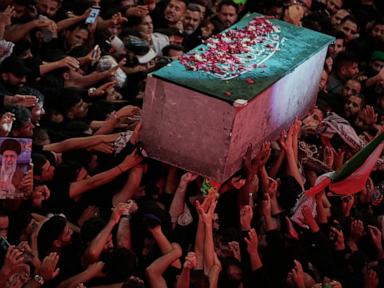
The sheer numbers are staggering. Reports coming out of Iraq indicate that over two million people packed the streets of Najaf early Wednesday. By the time the glass-encased casket reached Karbala later in the day, local estimates swelled toward seven million mourners.
The heat was brutal. Thousands pushed and shoved just to get close to the flag-draped truck carrying the coffin. At the Shrine of Imam Ali in Najaf, senior scholar Muhammad Taqi al-Hakim struggled to keep the surging crowd from literally toppling the casket. People threw themselves onto the structure, shouting, weeping, and performing self-flagellation.
"We, the people of Iraq, will remain a thorn in the eyes of the enemies," said Jaafar Jawad, an attendee in Najaf.
👉 See also: oconee county sc inmate search
The security presence was overwhelming. Iraqi authorities declared Wednesday a public holiday, shutting down normal life to accommodate the sea of black-clad pilgrims. High-profile figures packed the front rows, including Iraqi political heavyweight Muqtada al-Sadr, Ammar al-Hakim, and even Nigerian Shiite cleric Ibrahim Zakzaky.
A Funeral Delayed by War and Covered in Fresh Gunpowder
Let's look at the context everyone seems to gloss over. Khamenei didn't die of old age in a quiet hospital bed. The 86-year-old was killed back in late February during wide-scale U.S. and Israeli airstrikes on Iran. The state funeral had to be shelved for months because a massive war was actively tearing through the region.
Holding this multi-day ceremony now—stretching from Tehran and Qom to the holiest shrines of Iraq—is an intentional display of survival.
But the peace is incredibly thin. Just as Iranian President Masoud Pezeshkian and Foreign Minister Abbas Araghchi arrived in Najaf to escort the body, the Persian Gulf flared up again. The U.S. military launched fresh strikes against Iran early Wednesday morning following an incident where Tehran allegedly targeted three ships in the Strait of Hormuz. Iran immediately fired back, striking targets in Kuwait and Bahrain.
The violence forced President Pezeshkian to cut his trip short and rush back to handle the crisis. It's a stark reminder that while they mourn the old leader, the next war is already knocking on the door.
The Invisible Heir and the Future of Iranian Power
The most telling detail of this entire multi-day affair is who didn't show up.
Ayatollah Mojtaba Khamenei, the late leader's son and the newly appointed Supreme Leader, has been completely absent from the public ceremonies. Think about that. The most important transition of power in modern Iranian history is happening, and the main guy is missing.
Word on the street is that Mojtaba is buried deep in hiding. He was reportedly wounded in the same late-February airstrike that took out his father. On top of that, intelligence suggests Israel still has an active target on his back. His total absence creates a strange, ghostly vacuum at the center of this massive show of strength.
What This Means for the Region Moving Forward
The funeral is wrapping up, with the final burial set for Thursday at the Imam Reza shrine in Mashhad, Iran. But the fallout from this week will linger for years.
If you want to understand where the region goes next, keep your eyes on these realities.
- The U.S.-Iran Talks Are Dead in the Water: Any backchannel diplomacy or interim agreements aimed at permanently ending the war are completely frozen until the burial rituals end, and likely well after.
- The Strait of Hormuz Remains a Powder Keg: Iran used this funeral to project its intent to control this vital global energy artery, meaning maritime shipping will face extreme risks for the foreseeable future.
- Iraq's Sovereignty Is Complicated: The seamless integration of Iranian state funerals into Iraqi state infrastructure proves that Tehran's political and spiritual grip on Baghdad is as tight as ever.
Don't expect the dust to settle once the casket is in the ground. Watch the skies over the Persian Gulf and wait to see if Mojtaba Khamenei ever steps out of the shadows. That's where the real story begins.